Bridging the STEM Skills Gap
Executive Summary
The Challenge: World faces a growing STEM skills crisis. Most students still learn by rote, falling short of industry expectations for practical, job-ready skills.
The Solution: Experiential learning platforms bridge the STEM skills gap by making hands-on STEM scalable, affordable, and safe. High-fidelity experiential environments replace costly, hazardous equipment, enabling unlimited trial-and-error in a zero-risk environment.
1. The Skills Crisis
STEM job postings are growing 3.5× faster than other fields, but graduates aren’t keeping up [1]. Industry leaders now demand multi-disciplinary, hands-on expertise, from automation and Internet of Things to advanced simulations and data analytics. As one education expert notes, manufacturers need workers with experience in “integration, virtualization, [and] simulation” [5].
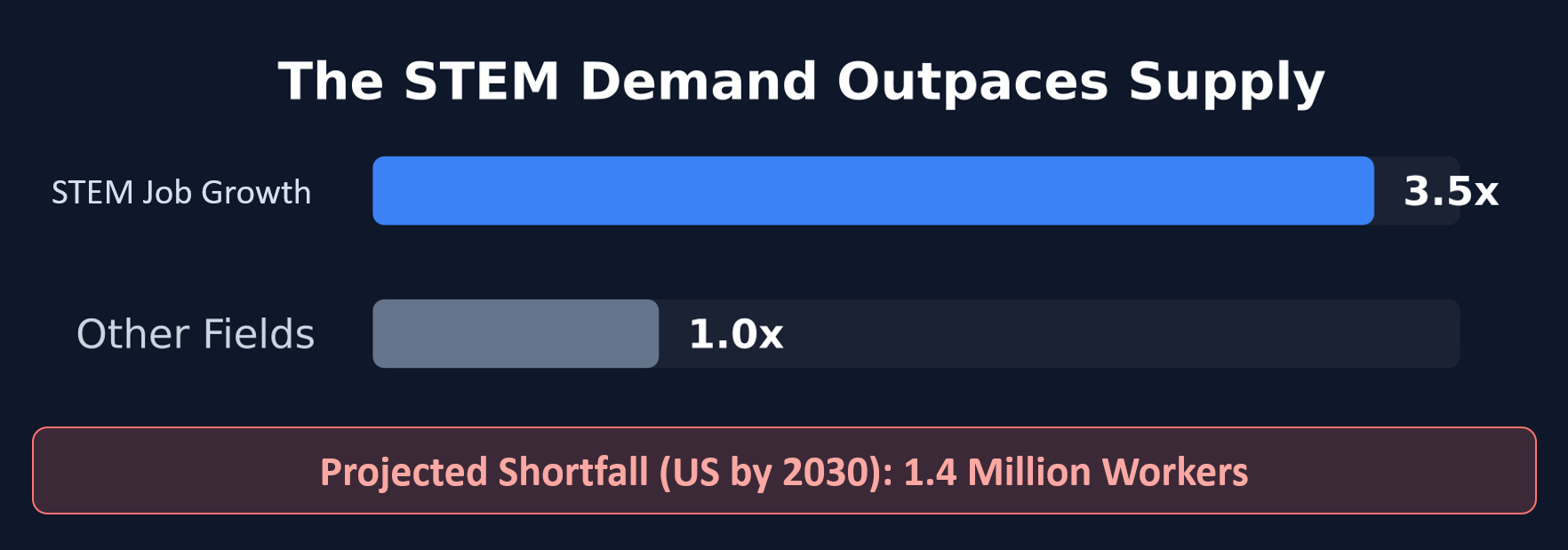
Figure 1: STEM job postings are expanding rapidly, exacerbating a projected multi-million worker shortage globally.
Yet many schools still emphasize memorizing formulas over experiential learning, creating a severe mismatch. India’s National Education Policy (NEP 2020) explicitly calls for change: it pushes “experiential learning, competency development, [and] reduced dependence on rote memorization” [4]. This aligns with global trends: engineers and scientists must do more than recall facts, they must do science and engineering. Experiential learning platforms answer this call by putting students in the driver’s seat of experiments. As Texas A&M research highlights, immersive experiential tech “bolsters cognitive learning” and “significantly enhances the mastery of complex procedural tasks” [6], far surpassing what lectures alone can achieve.
2. Sustainability & Cost Challenges
Traditional labs are costly and wasteful. Building a physical lab takes months of construction and expensive equipment procurement. Once built, these labs consume chemicals, glassware, and other consumables every year, all of which must be purchased, stored, and eventually discarded. There are also significant space and maintenance costs, alongside serious safety liabilities like chemical spills, burns, and electrical hazards.
By contrast, experiential learning platforms have minimal resource costs. A high-fidelity experiential environment is largely a one-time software setup with low recurring costs [4]. There are no consumables to buy (no acids, tanks, or cartridges to throw away) and no physical hazards to manage [3][4]. Students can perform the same experiment digitally infinitely without depleting materials.
Using our STEAMIFIED Labs, educational institutes can shift STEM lab budgets from CapEx to OpEx. Instead of sinking millions into physical equipment that rapidly depreciates, administrators can subscribe to experiential learning platforms. These cloud-based experiential environments save money on expensive hardware [3], while our Digital Safety Standard ensures 100% hazard elimination.
3. The Experiential Learning Solution
The answer to the STEM gap is high-fidelity experiential learning. These immersive, interactive environments democratize access to advanced infrastructure. A Tier-3 college in India can now offer students the equivalent of Silicon Valley, level equipment without the millions in CapEx. Students anywhere can log in and run real experiments in a highly immersive setting.
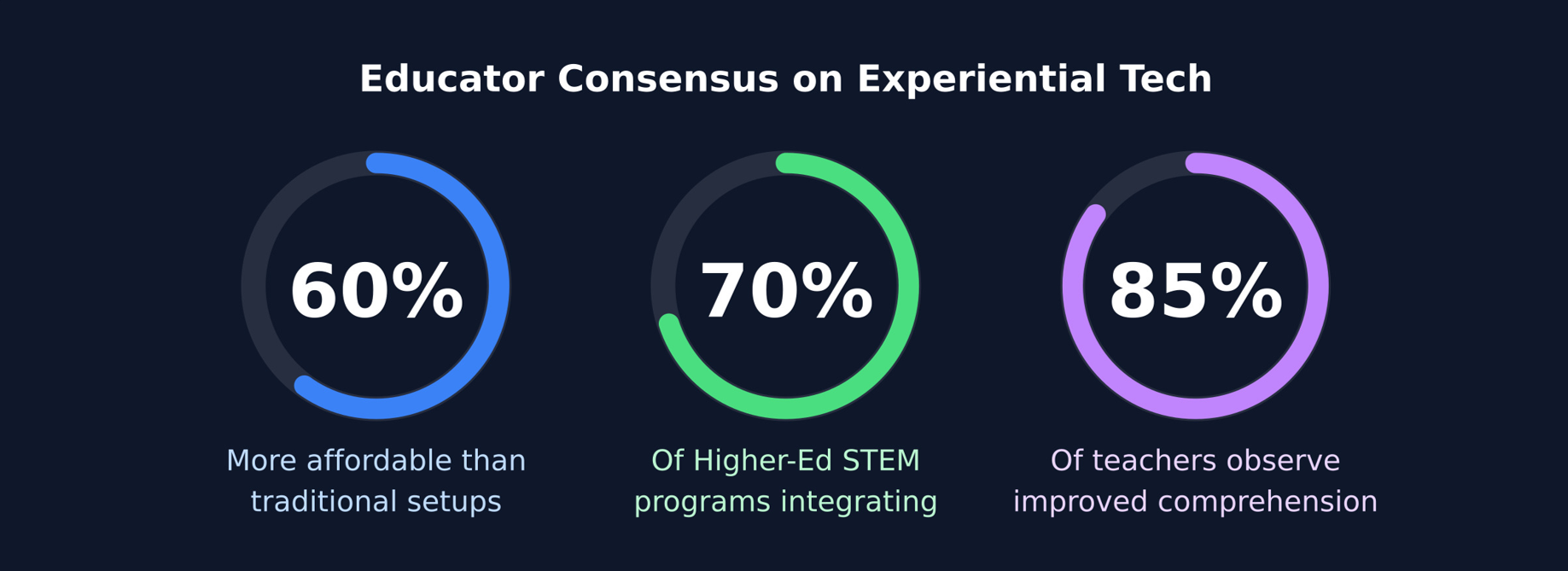
Figure 2: Experiential learning tools show high adoption rates and overwhelming positive consensus among educational leaders.
Key advantages of Experiential Learning platforms include:
Unlimited Access & Practice: Unlike a physical lab with limited workstations, experiential learning platforms can be deployed to dozens or hundreds of students simultaneously. They can run, pause, and repeat experiments as often as needed, deepening understanding through trial and error [3]. Our Competency based experiential learning platform is built around this concept: students fail and retry without cost, accelerating mastery.
Cost Efficiency & Sustainability: Educational institutes save massively on consumables and equipment replacements. Over 60% of educators report experiential cloud labs are more affordable than traditional setups [3]. Additionally, experiential labs consume zero materials, making STEM learning perfectly eco-friendly and entirely safe.
Alignment with Future Skills: Students get early exposure to experiential tech platforms actually used in industry. By practicing in experiential STEM environments, students build comfort with these tools. Studies show 70% of higher-education STEM programs are integrating immersive tech [3], and 85% of teachers report improved engagement and comprehension [3].
Scalable Innovation: New experiments can be uploaded centrally and instantly made available to all partner institutions. For example, Delhi’s education department has rolled out 300 curriculum-aligned virtual lab modules via a government portal, covering science and even grammar simulations [7].
4. The Impact: Traditional vs. Experiential
| Metric | Traditional Physical Labs | Experiential Learning Platforms |
|---|---|---|
| Setup Time | Lengthy: building lab space, ordering equipment (months) | Rapid: software deployed in days/weeks [4] |
| Cost Structure | High CapEx for facilities; recurring costs for consumables [3] | Shiftable to OpEx subscriptions (no consumables) [3][4] |
| Safety Liability | Significant (chemical spills, burns, electrical accidents) | None (100% digital, meeting zero hazard standards) [4] |
| Scalability | Limited by physical space & schedules | Virtually unlimited access anywhere [3] |
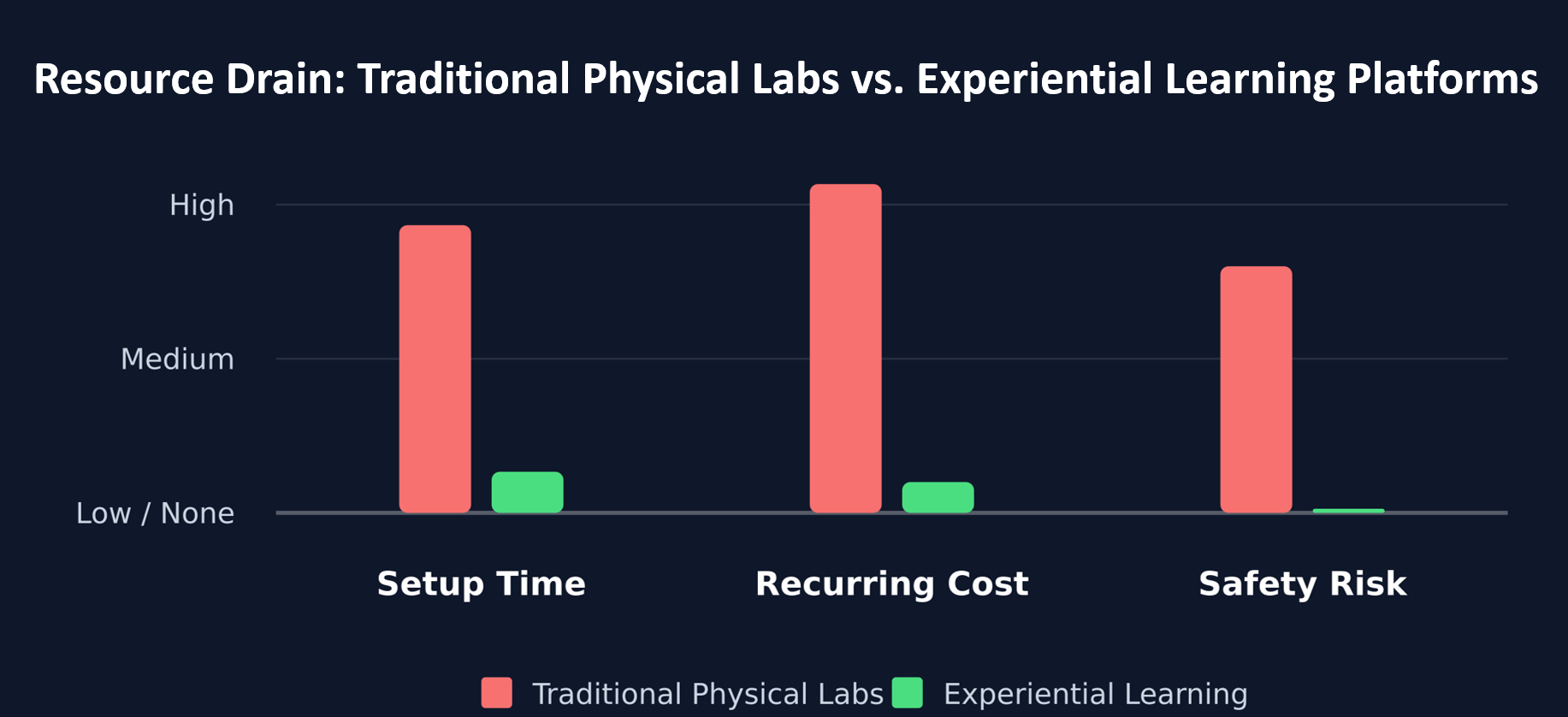
Figure 3: Experiential learning platforms drastically reduce setup times, recurring costs, and completely eliminate safety hazards compared to physical constraints.
5. Alignment with NEP 2020
India’s new National Education Policy (NEP 2020) emphasizes “experiential learning” and competency-based education, moving away from rote memorization. Immersive experiential environments fit this mandate perfectly. As NEP states, students should engage with concepts directly [4]. For instance, a child can explore a 3D model of the human heart instead of just labeling a textbook diagram [4]. By integrating high-fidelity experiential simulations aligned to the NCERT curriculum, schools fulfill NEP’s vision of hands-on, enjoyable science education.
Moreover, NEP calls for reducing infrastructure gaps and promoting inclusivity. Experiential learning allows students with disabilities or language barriers to learn at their own pace. Rural schools lacking funds can still provide advanced experiential STEM education through the cloud, ensuring every Indian classroom can deliver modern learning.
References
- Workforce Readiness Requires Stronger STEM Education https://www.nms.org/blog/workforce-readiness-requires-stronger-stem-education
- Closing the Skills Gap in India: Bridging Education and Industry Needs, ETEducation https://education.economictimes.indiatimes.com/blog/closing-the-skills-gap-in-india-bridging-education-and-industry-needs/122849180
- How Cloud-Based Virtual Labs Are Reshaping STEM Education https://cloudtweaks.com/2025/02/virtual-labs-are-reshaping-stem-education/
- Virtual Reality Labs in Indian Schools: NEP 2020 Ready https://www.qodequay.com/virtual-reality-labs-in-indian-schools-nep-2020-ready
- Crossing the Skills Gap Between Industry 4.0 and CTE Programs | Getting Smart https://www.gettingsmart.com/2020/11/14/crossing-the-skills-gap-between-industry-4-0-and-cte-programs/
- Interactive and Immersive Education – Texas A&M University College of Performance, Visualization & Fine Arts https://pvfa.tamu.edu/institutes/iac/interactive-immersive-education/
- Learning gets hands on with 300 virtual labs in govt schools | Delhi News - Times of India https://timesofindia.indiatimes.com/city/delhi/learning-gets-hands-on-with-300-virtual-labs-in-govt-schools/articleshow/121194552.cms
Disclaimer
Regarding educational frameworks and statistics
The insights, statistics, and pedagogical frameworks provided in this blog post are shared for informational purposes and to help guide the future development of STEM infrastructure. These contributions do not guarantee specific educational outcomes or institutional success. All intellectual property rights related to our pedagogical frameworks remain exclusively with the publisher.
Regarding third-party websites
This blog post may contain links to the websites of third-party organizations, research institutions, and government portals. These links are provided for informational and convenience purposes only and are not an endorsement of the organizations, their products, or their services. We have no control over the content, security, or availability of these third-party sites and assume no responsibility for any information or materials found on them. We encourage readers to review the terms of use and privacy policies of any third-party sites they visit.
General provisions
No warranty: We make no representations or warranties, express or implied, regarding the completeness, accuracy, reliability, or suitability of the information contained within this blog post.
Use at your own risk: The content of this blog is for informational purposes only. By using this information, you agree that you are doing so at your own risk and that the publisher is not liable for any damages or losses that may result.